About NIGAB — National Mandate & Governance
Established in 2007 under the Pakistan Agricultural Research Council (PARC), NIGAB is Pakistan's apex national institute dedicated to cutting-edge agricultural genomics, CRISPR genome editing, and advanced biotechnology across plants, animals, and microbes.
Laboratories
Programmes
Isolated
Scholars
Publications
Established
A national platform for agricultural genomics
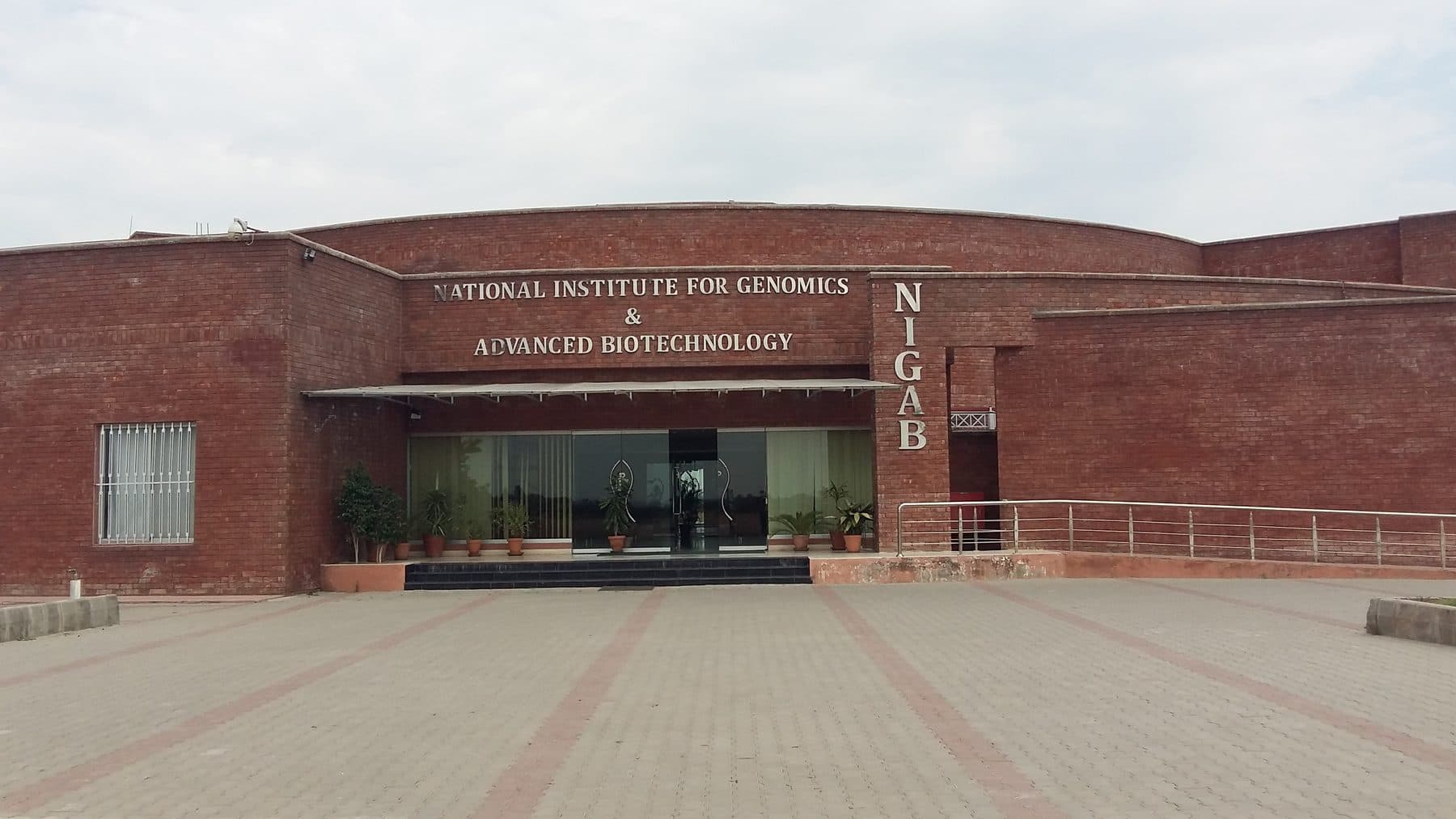
The National Institute for Genomics and Advanced Biotechnology (NIGAB) is an exclusive national institute dedicated to undertaking agricultural research in all three domains of life — plants, animals and microbes. It is a complex of biotechnology with 28 state-of-the-art laboratories, each designated for a specified area, along with glasshouses and containment facilities.
Since its inception in 2007, NIGAB has been recognised nationally and internationally for quality research in agricultural biotechnology. Its research programmes primarily focus on enhancing plant and animal productivity by at least 10% and developing value-added bio-products for national food security — contributing directly to Pakistan’s sustainable development goals and rural economy.
Through traditional genetic engineering, NIGAB has developed GMOs of wheat, groundnut, potato and tomato against disease, drought and salinity, which await regulatory approval for commercial use at farm level. The institute has also exploited marker-assisted selection for the development of new crop varieties with rust, salinity and drought tolerance.
NIGAB has embarked on new breeding technologies including speed cloning, speed breeding, genomic selection and genome editing using CRISPR-Cas9, dCas9 and Cpf1 approaches. Next-generation sequencing data obtained through genome re-sequencing and transcriptome (RNA-seq) sequencing is analysed for varietal and hybrid identification, SNP marker development and gene discovery. Thirty novel genes related to desirable plant traits have been isolated and are being genome-edited.
NIGAB is a credible reference laboratory for biotechnology and molecular diagnostic testing of GMOs, identification of unknown olive varieties, and detection of adulteration in exportable commodities for quality assurance. Its tissue culture section has replaced infected banana with virus-free banana across Sindh province, with four new varieties currently in the pipeline.
In the livestock sector, NIGAB is actively involved in developing vaccines for disease prevention and epidemic control, and in selecting superior animal breeds using NGS data for improved milk and meat productivity. Development of indigenous probiotic feed additives to improve dairy buffalo productivity in a cost-effective manner is also a priority research area.
Institute Profile
- Established
- 2007
- Parent body
- PARC
- Campus
- NARC, Islamabad
- Director
- Dr. Shaukat Ali
- Research domains
- Plant · Animal · Microbial
Partner with Pakistan’s national genomics institute
Whether you need reference-grade GMO testing, DNA fingerprinting for export quality assurance, or a research collaboration, NIGAB’s laboratories and scientists are available to the public and private sector.